
What causes the plumbing faults UK homes see most often, what you can safely check yourself, and when to call a plumber.
Blog
Common plumbing problems at home and how to prevent them
Wrose Elite Plumbing & Bathrooms
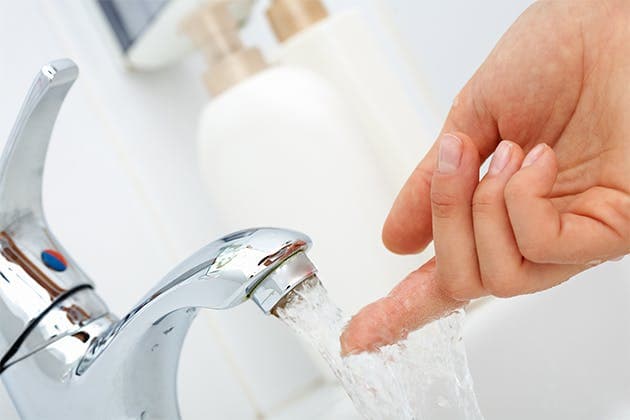
Most plumbing problems in a UK home come down to a handful of things: dripping taps, toilets that keep running, blocked sinks and drains, poor water pressure, and pipes that freeze or burst in winter. Most of them start small, and most of them can be spotted early or prevented with a few simple habits.
This guide covers what causes each one, what you can safely check, and when to call a plumber. None of the checks involve opening anything that holds back mains water. If you're ever unsure, turn the water off and call a professional.
Find your stopcock before anything goes wrong
The stopcock is the tap that turns off the cold mains water to your whole home. It's usually under the kitchen sink, but in older houses it can be in a cellar, under the stairs or beneath a floorboard.
Find it now, while nothing is leaking, and check it turns clockwise to close. If it's stiff, don't force it, as an old stopcock can snap. Our guide to finding your stopcock and turning off your water walks through it step by step.
Dripping taps and leaks under the sink
A dripping tap is usually a worn washer (a small rubber disc inside older taps) or a worn ceramic cartridge in newer quarter-turn taps. It wastes water, and on a hot tap the energy used to heat it.
Every few months, look in the cupboard under your sinks with a torch. Check the pipes, the flexible hoses to the taps and the trap (the U-shaped bend under the plughole that holds water to stop drain smells). Signs of a slow leak are:
a damp or swollen cupboard base
white or green crusty marks on joints
a musty smell
A loose plastic trap can often be hand-tightened. A leak from a copper joint, a tap connection or a hose needs a plumber, because over tightening can split the fitting.
A toilet that keeps running or won't flush properly
If you can hear water trickling into the pan, or the cistern (the tank behind or above the toilet) refills on its own every so often, water is escaping somewhere. In most UK toilets the cause is one of two parts:
The fill valve, which lets water into the cistern and shuts off when it's full. If it doesn't shut off, water runs out through the overflow.
The flush valve or siphon, which releases water into the pan when you flush. If its seal is worn, water seeps through all the time.
Lift the cistern lid and watch the water level. If it rises above the overflow pipe, the fill valve is the likely problem. If the level is fine but water still trickles into the pan, it's usually the flush valve seal. Our post on why a toilet keeps running goes into more detail. Parts vary between makes, and finding the right one is often what fixes it for good.
Blocked sinks, toilets and drains
Kitchen sinks block with fat and food scraps, basins and showers with hair, and toilets with wet wipes, even "flushable" ones. A sink strainer, a shower hair catcher and putting fat in the bin prevent most blockages.
For a slow sink, a plunger is the safe first step. Avoid pouring strong chemical drain cleaners into a fully blocked sink, as they can sit in the trap and damage older pipes.
If several sinks or the toilet drain slowly at once, or water backs up from an outside drain cover, the blockage is further down. Drains inside your property boundary that serve only your home are your responsibility. Drains shared with neighbours, or running beyond your boundary, are in most cases Yorkshire Water's, so it's worth calling them first for a shared drain.
Low water pressure or a weak flow
First, check whether it's just you by asking a neighbour or checking Yorkshire Water's website for work nearby. Then make sure your stopcock is fully open.
If only one tap or shower is weak, limescale in the tap aerator (the small mesh at the spout) or the shower head is a common cause, and both can be soaked in descaler. Water in Bradford is generally soft, so limescale builds slowly here, but parts of Leeds have harder water. You can check your own postcode on Yorkshire Water's water hardness page.
If the whole house is weak, old supply pipes, a part-closed valve or a hidden leak may be to blame, and a plumber can trace it.
Frozen and burst pipes in winter
Water expands as it freezes, which can split a pipe or push a joint apart, often without showing until it thaws. Pipes in lofts, garages and outside walls are most at risk.
Before the cold sets in:
lag (insulate) exposed pipes and the cold water tank in the loft
turn off and drain outside taps using the isolating valve indoors, if you have one
keep the heating on low when you're away, rather than off
If a pipe bursts, turn off the stopcock straight away, open the cold taps to drain the pipes and catch what water you can. If water is near light fittings, sockets or the consumer unit (your fuse box), don't touch them. Then call an emergency plumber.
Hidden leaks from baths and showers
A failed seal around a bath or shower tray, or a leaking waste pipe underneath, can drip unseen for months. We've been called out more than once to baths where a slow leak had rotted the boards beneath.
Look for cracked or mouldy sealant, tiles that feel loose, or a ceiling stain under the bathroom. Replacing tired sealant is a reasonable DIY job. Anything behind the panel or under the floor is one for a plumber. Our guide to shower leaks and their causes explains how to narrow it down.
When to call a plumber
Call a plumber when water is escaping and you can't stop it at a tap or valve, when the same problem keeps coming back, or when the fix means opening a joint on a mains pipe. A small leak fixed early costs far less than the ceiling it can bring down.
When we visit, we find the cause before changing anything, explain what we've found and agree the work with you before we start.
If you've got a drip, a leak or a toilet that won't behave, Wrose Elite Plumbing and Bathrooms can take a look. You can book a visit through our plumbing service page.
Got a drip or a leak that won't stop?
Tell us what's going on and we'll arrange a visit to find the cause and fix it properly.
Other Articles


