

Cold patches at the top of your radiator or gurgling noises from the pipes usually mean trapped air. Bleeding your radiators is a simple job most homeowners can handle, as long as you follow a safe, methodical process.
What bleeding a radiator does and when it helps
Over time, air can build up in your heating system and rise to the top of radiators. This stops hot water circulating properly and can leave the top cool while the bottom feels warm.
Bleeding a radiator releases this trapped air so hot water can fill the whole panel again. It often solves issues such as:
Radiators warm at the bottom but cool or cold at the top
Gurgling or trickling sounds in pipes and radiators
Some rooms slower to heat up than others
If the bottom of the radiator is cold but the top is hot, that usually suggests sludge or debris rather than trapped air, which bleeding alone will not fix.
Tools and basic safety checks before you start
You only need a few simple items to bleed most modern radiators. Getting these together before you start will make the job quicker and cleaner.
What you will need
Gather the following:
Radiator key – This is a small square-ended key for the bleed valve. Some designer radiators use a flat-head screwdriver instead. Check your valves before you begin.
Cloth or rag – Use this to catch any drips and protect your hand as you open the valve.
Small container – A mug or plastic tub placed under the valve helps catch water and protect your flooring.
Safety checks to keep you and your home protected
Working carefully will reduce the risk of scalds and water damage. Take a couple of minutes to make these checks first:
Turn your heating off at the boiler or programmer. Bleeding radiators with the heating running can pull more air into the system and may release very hot water.
Allow the system to cool for at least 30 minutes, longer if it has been on high. The water inside can be far hotter than it feels on the outside of the radiator.
Lay an old towel under the radiator and have your container ready below the valve. This helps protect carpets, laminate and skirting boards from splashes and rust-coloured water.
Step-by-step: how to bleed a radiator safely
Once everything is ready and the system has cooled, you can bleed your radiators. It is usually best to start with the radiator furthest away from the boiler and work your way back towards it.
1. Locate the bleed valve
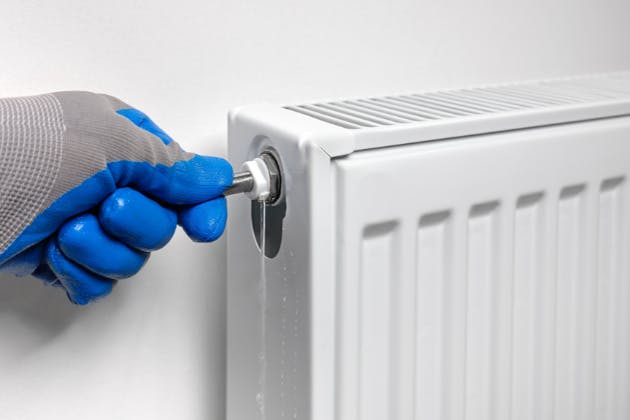
The bleed valve is usually at the top corner of the radiator, often on the side. It has a small square or slot in the middle. Place your container underneath and keep a cloth in your hand.
2. Insert the key and turn gently
Fit the radiator key over the square pin in the valve. Turn it slowly anticlockwise, no more than a quarter to half turn. You should hear a hissing sound as air escapes.
Keep your hand steady and do not fully remove the valve screw. A small turn is enough to let air out in a controlled way.
3. Wait for a steady flow of water
Let the air hiss out until water starts to come through the valve. At first it may splutter or spit. Once the flow is steady and free of air, the radiator is bled.
Use your cloth to deflect any drips into the container so they do not mark the wall or floor.
4. Close the valve firmly, but not too tight
Turn the valve clockwise with the key until it is snug and the water stops. Do not overtighten, as this can damage the valve or make it difficult to open next time.
Wipe the area dry and check for any signs of continued weeping after a minute or two.
5. Repeat on other radiators if needed
Work through the rest of the radiators in your home, one at a time. If only one radiator had issues, you may not need to bleed them all, but it can be a good opportunity for a routine check.
What if no water comes out or the bleed valve is stuck?
If you open the valve and nothing comes out at all, even after several seconds, close it again. The system may be very low on pressure or there may be a blockage.
A stuck valve should never be forced with pliers or grips. This can shear the valve off and cause a significant leak. If it will not move with gentle pressure using the correct key, it is safer to stop and contact a heating engineer.
Similarly, if water sprays out under high pressure or you cannot close the valve fully again, tighten it as much as you reasonably can and then turn the heating and boiler off. Place a container to catch drips and seek professional help promptly.
Checking and topping up boiler pressure afterwards
Bleeding radiators releases air but also reduces the amount of water in your heating system. This can cause the boiler pressure to drop slightly, which is normal.
Once you have finished bleeding, go to your boiler and look at the pressure gauge. On most domestic systems, the cold pressure should sit somewhere around the lower end of the green band, usually in the region of 1 to 1.5 bar, but always work within the marked green zone for your specific boiler.
If the pressure has fallen below the recommended range, you may need to top it up using the filling loop, usually a small silver flexi-hose with taps at each end. Open the taps slowly and watch the gauge rise, then close them again as soon as the needle is back in the normal range.
If you are unsure how to use the filling loop, check your boiler manual or ask a professional for guidance. Never leave the filling loop taps open or intentionally run the pressure higher than the green zone.
Older West Yorkshire Homes: Why Radiators Stay Cold at the Bottom
Many properties across West Yorkshire have older heating systems and original pipework. Over time, rust, limescale and sludge can build up in the bottom of radiators, especially on systems that have not been flushed or treated regularly.
If your radiator is hot at the top but cold at the bottom, bleeding will not clear this sludge, as the debris sits in the water, not the air. In these cases you may need a more thorough clean, such as a system flush, radiator removal for manual cleaning or improved water treatment.
If several radiators show the same cold-bottom pattern or you notice black, dirty water when bleeding, it is worth speaking to a heating specialist about cleaning options for the whole system.
When to stop DIY and call a professional
Bleeding radiators is a straightforward maintenance task, but there are times when continuing to experiment is not sensible and could cause damage or ongoing issues.
It is a good idea to call a professional if:
You have to bleed the same radiators frequently and air keeps returning
You notice leaks from valves, pipe joints or the radiator panels after bleeding
The boiler pressure keeps dropping even after topping it up correctly
Multiple radiators stay cold or only partially warm despite careful bleeding
Repeated air problems can indicate a more serious issue, such as a system design fault, corrosion or a small leak that needs proper investigation.
Quick FAQ about bleeding radiators
Do I bleed radiators with heating on?
No. Always turn the heating off and let the system cool first. This makes the job safer and helps prevent pulling more air into the system while you bleed it.
How often should I bleed my radiators?
There is no fixed schedule, but many homeowners find it useful to check once or twice a year, often at the start of the heating season. If you notice cold tops or gurgling, that is a good prompt to bleed them.
Can bleeding radiators fix every heating problem?
Bleeding only deals with trapped air. Issues such as sludge, scale, faulty valves, circulation pumps or boiler problems will not be solved by bleeding and need professional diagnosis.
Need expert help with your heating?
If bleeding your radiators has not restored even heat, you are worried about pressure that keeps dropping, or you suspect sludge in an older system, it is time to get a specialist involved. A qualified engineer can check for leaks, assess boiler performance and clean or balance the system properly.
For friendly, professional support with radiator problems, boilers and heating systems, contact Wrose Elite Plumbing & Bathrooms on 01274010405 for diagnostics and boiler repairs.